Memorial Ambulatory Surgery Center Commits Gross Negligence
Houston Surgery Center Commits Gross Negligence In Woman's Death
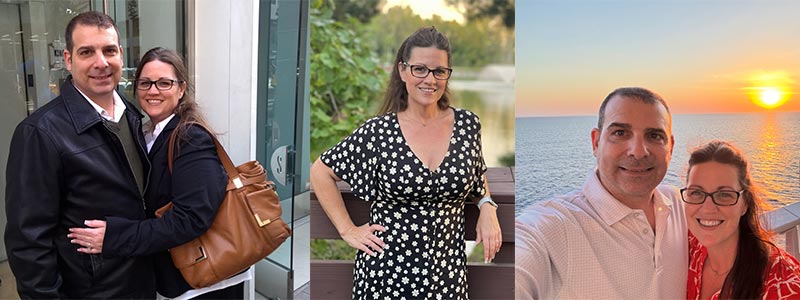
On August 13, 2025, at 6:37 a.m., Joy arrived at Memorial Ambulatory Surgery Center to undergo the aforementioned procedures. The surgery team consisted of Dr. Roehl, who would perform the procedure, Dr. Yiu-Hei Ching, who would provide general endotracheal anesthesia, operating room nurse Gianni Bongol, RN and assistant Casey Heikkinnen, CSA.
Operating Room (OR) at approximately 8:11 a.m.
The records from Memorial Ambulatory Surgery Center contain two anesthesia records. The original anesthesia record appears to have been written before the surgery. The surgery team entered the Operating Room (OR) at approximately 8:11 a.m. and the procedure began at approximately 8:26 a.m. The “Revised” anesthesia record shows that vasoactive agents (vasopressors), namely phenylephrine and norepinephrine which are used to artificially increase and maintain blood pressure, were started at 9:30 a.m., approximately one hour into a ten-hour long procedure, and were never discontinued.
The surgical records are scant and contradictory. The two anesthesia records document very different vital signs throughout the surgery. However, based on the “Revised” anesthesia records, Joy suffered from low blood pressure at least as early as 11:55 a.m., and her blood pressure had fallen from a stable 130/70 all the way down to 90/60 by 12:30 p.m. while being artificially maintained by vasopressors.
Also documented on the “Revised” anesthesia record were issues with maintaining Joy’s body temperature. By 4:00 p.m., Joy’s temperature had steadily dropped from her preoperative value of 37.2°C (98.96°F) down to 32.4°C (90.32°F), which is considered moderate hypothermia. Hypothermia is both a cause and a symptom of low blood pressure and indicates that Joy’s body was struggling to maintain full circulation throughout the procedure.
Procedure ends at approximately 6:12 p.m.
The procedure ended at approximately 6:12 p.m., when Joy was transferred to the post-anesthesia care unit (PACU) for recovery and into the care of PACU nurse Haley McAnelly. The surgery lasted over ten hours and included:
- Liposuction 360 (Lipo 360TM)
- Abdominoplasty (Tummy Tuck)
- Brazilian Butt Lift
- Breast augmentation mastopexy (with implants)
- Circumferential body lift
- Extended brachioplasty
By the end of the procedure, Dr. Roehl had operated on approximately 41% of Joy Barbera’s body, including both of her arms, her chest, her abdomen, her back and flanks, and her buttocks. In total, at least 6,600 cc (6.6 L) of liposuction aspirate was removed from Joy’s body to be either reinserted or discarded.
Dr. Roehl wrongly noted in her operative report that Joy had only lost 300 cc of blood during the procedure. However, nurse Bongol noted the use of 90 lap pads, which would correspond more closely to a blood loss of 2250 cc. There is nothing in the medical records indicating that blood loss was recorded throughout the procedure. An average woman of Joy’s height and weight would have an approximate total blood volume of 4400-4500 cc.
At no point during the surgery was Joy given a blood transfusion or treated with blood products. It is apparent that no blood was available at the surgery center for transfusion even though the surgical consent form used by Memorial Ambulatory Surgery Center states that if bleeding occurs, a transfusion may be needed.
Upon Joy’s arrival in the PACU, nurse McAnelly recorded the following vital signs: blood pressure (BP) 90/52, Heart rate (HR) 87, Respiratory rate (RR) 16, O2 100% on a 6-liter face mask, and her temperature was recorded as 35.8°C (96.5°F). Drs. Roehl and Ching were also present in the PACU at this time.
Over the next 45 minutes, Joy’s blood pressure would drop, as vasopressors were stopped, getting as low as 55/35 at 6:30 p.m. and would never fully recover before transfer. By 8:00 p.m., it had again fallen to 51/25.
At approximately 7:00 p.m., Dr. Roehl left the surgery center
At approximately 7:30 p.m., Joy’s hemoglobin was checked and found to be 4.6 g/dL. An average hemoglobin level for a woman such as Joy Barbera is between 12.3 g/dL – 15.4 g/dL. 4.6 is considered dangerously low. Dr. Roehl was called and ordered that an ambulance be called to transfer Joy to the hospital at 8:00 p.m.
At approximately 8:10 p.m., an ambulance arrived and transferred Joy from Memorial Ambulatory Surgery Center to Memorial Hermann Hospital with a Glascow Coma Score of 7, which means she was in a coma and signifies a critical neurological state. At the hospital, Joy’s skin was pale and cold to the touch. At 10:27 p.m., her hemoglobin was recorded at 4.6 g/dL and her hematocrit was 15.2 – both indicative of severe blood loss.
Joy would receive transfusions and other treatments in the hospital, but such care was ultimately provided too late as Joy developed disseminated intravascular coagulation (DIC) in part due to the hypothermia and the large amount of fluid she received without blood replacement during the surgery and nearly 2 hours in the PACU. Joy’s pre-operation weight was 154 lbs. whereas her autopsy weight was 204 lbs. due to the fluids she received. In addition to DIC, she suffered from multi organ failure and shocked liver as a result of her massive blood loss during surgery and her PACU stay at Memorial Ambulatory Surgery Center.
Joy Barbera would die at 1:06 p.m. on August 14, 2025
An autopsy performed by the Harris County medical examiner would find evidence of fat emboli in Joy’s lungs, as well as 500 cc of blood in the abdominoplasty area. The official cause of death was “Hemorrhagic shock following liposuction of abdomen, back, flanks, posterior arms with fat grafting to buttocks, circumferential body lift, bilateral mastopexy, bilateral breast augmentation, and left lower extremity lipoma excision.”
The lawsuit sets forth multiple acts of gross negligence on the part of Dr. Roehl including:
- Scheduling a 10-hour surgery including 6 different procedures on Joy Barbera in an ambulatory surgery center despite the American Society of Plastic Surgeons’ (ASPS) recommendation that multi-procedure surgery be limited to 6 hours outside of a hospital;
- Doing 6600ccs of liposuction aspirate despite the ASPS’ recommendation that the maximum volume of liposuction aspirate performed in an ambulatory surgery center be limited to 5000cc.;
- Operating on 41% of Joy Barbera’s surface when the ASPS recommends limiting surgery to 30% of a patient’s total body surface area in an ambulatory surgery center;
- Failing to stop the surgery at 9:30 a.m. when vasopressors had to be used to maintain Joy Barbera’s blood pressure;
- Failing to immediately transfer Joy Barbera to a hospital instead of the PACU at the surgery center;
- Abandoning Joy Barbera in the PACU and leaving the surgery center despite knowing of her critical and deteriorating vital signs.
Lawsuit Sets Forth Gross Negligence of Dr. Ching
- Agreeing to provide anesthesia services for a 10-hour elective cosmetic procedure in an ambulatory surgery center with no blood or blood products available;
- Preparing an inaccurate original anesthesia record and then a “Revised” anesthesia record which was still inaccurate;
- Failing to monitor the amount of blood lost by Joy Barbera including not obtaining an intraoperative hemoglobin and hematocrit at regular intervals;
- Administering large amounts of crystalloid fluids causing dilutional coagulopathy, increased bleeding and ultimately DIC, instead of administering blood and blood products such as platelets and fresh frozen plasma;
- Failing to immediately call for a transfer to a hospital during and after the surgery but instead keeping Joy Barbera at the surgery center for approximately 2 hours after surgery in the PACU.
In addition, the lawsuit seeks to hold Memorial Ambulatory Surgery Center (which is owned by Dr. Roehl and her partners) and its nurses liable for:
- Failing to recognize that Joy Barbera was hypothermic and needed warming and if adequate equipment was unavailable, advocate for transfer to a higher level of care;
- Failing to monitor the amount of blood lost by Joy Barbera during the surgery;
- Failing to advocate to a physician for an end to the surgery in light of Joy Barbera’s temperature and blood loss;
- Failing to recognize and advocate for Joy Barbera’s need for immediate transfer to a higher level of care either during surgery or as soon as she arrived in the PICU.
Dallas attorney Les Weisbrod, partner at Miller Weisbrod Olesky, a nationally recognized medical malpractice attorney and past president of the American Association for Justice (the world’s largest trial lawyer association), is representing Peter Ginnegar. Weisbrod also represented Rolanda Hutton, who filed suit in November 2017 after being paralyzed from a Brazilian Butt Lift performed in an outpatient ambulatory surgery center in Dallas.
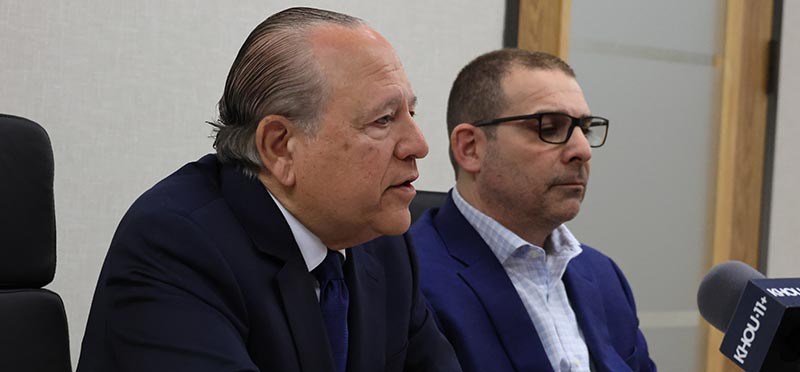
Weisbrod said, “The conduct in this case amounts to murder by malpractice. The surgery should have been stopped when Joy required vasopressors about an hour after the surgery started. Instead, the surgery continued another 9 hours, and Joy was kept 2 more hours in recovery at the surgery center while she was bleeding to death and desperately needed blood which was not available at Memorial Ambulatory Surgery Center.”
“Patients need to be aware of the dangers of extensive plastic surgery performed in free-standing outpatient surgery centers,” Weisbrod emphasized.
Wrongful Death Press Conference: 3/5/26 - 11:00 am CST
Contact Our Medical Malpractice Attorneys
If you or a loved one suffered due to medical malpractice, we welcome the opportunity to fight for your rights and your recovery. Please call Miller Weisbrod Olesky, Attorneys in Dallas today at (214) 987-0005 or toll free at (888) 987-0005 for a free consultation.
Miller Weisbrod Olesky
Miller Weisbrod Olesky's Personal Injury Lawyers help individuals and families nationwide pursue real financial recovery after another's negligence causes an accident or medical mistake that results in serious personal injury or wrongful death.
Call our offices today at (888) 987-0005 for experienced assistance in a free consultation.
Useful Links
Testimonials
- Ms. Rosen: Mr. Weisbrod did a wonderful job on my son's case. I only wished that I had come to him sooner.
- A. Springs: Mr. Weisbrod was a delight to work with. His knowledge and memory was exceptional. He treated my case with sensitivity and care and I was always confident and never doubtful that he would win my case.
- D. Garcia: Whether you're in Dallas, Houston, or Austin, across Texas or around the nation, putting Miller Weisbrod Olesky on your legal team will push parties to settle.
Locations
★ Dallas
11551 Forest Central Drive, Suite 300
Dallas, TX 75243
★ Houston
12929 Gulf Freeway, Ste 111
Houston, TX 77034